A project for the first facility with such advanced technology has been designed
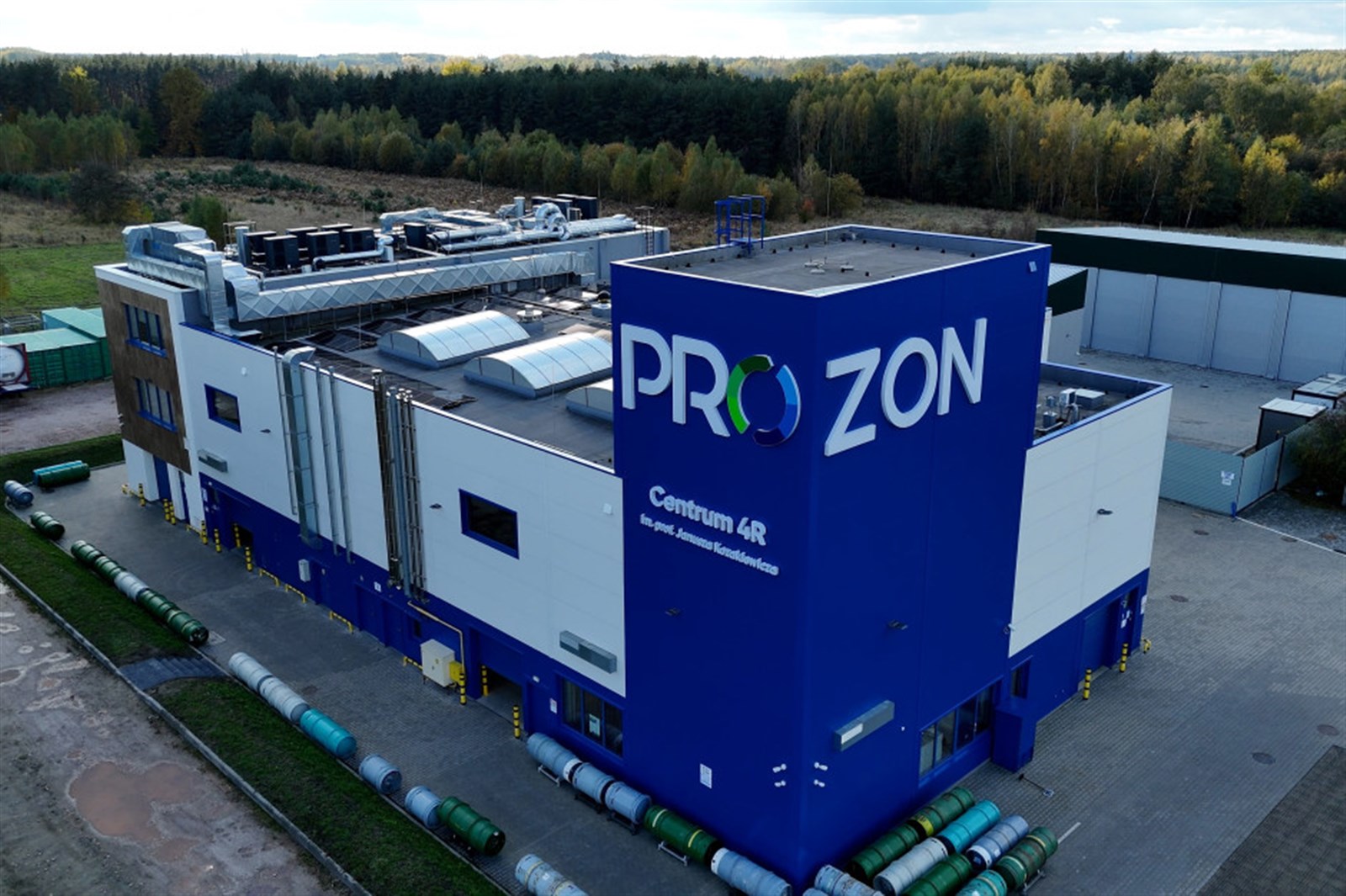
Grand opening of the 4R facility in Grabce Józefpolskie
On October 23, in the village of Grabce Józefpolskie near Mszczonów, the grand opening of the 4R (Recovery, Recycling, Reclamation, Reuse) facility took place, which utilizes a unique technology for the separation of refrigerant mixtures. The facility was named after the late Prof. Janusz Kozakiewicz – a world-class authority who, throughout his long professional career, made an invaluable contribution to the development of science and environmental protection, particularly in the field of ozone layer and climate protection.
– Currently, the quantity of refrigerants on the market is limited by quotas, and thanks to the regeneration and separation facility, their availability for Polish entrepreneurs will increase – explains Krzysztof Grzegorczyk, President of the Board of the PROZON Climate Protection Foundation.
– Over nearly 30 years of the Foundation's activity, more than 2,000 tons of refrigerants have been recovered and managed within the 3R (Recovery, Recycling, Reclamation) network. Without the 3R network and the newly established 4R facility, used refrigerants would end up in the atmosphere, destroying the ozone layer and contributing to the greenhouse effect or – at best – would be sent for disposal. Annually, as a result of the recovery and regeneration of refrigerants in our 3R network, greenhouse gas emissions are reduced by the equivalent of 300,000 tons of CO₂. Additionally, thanks to the separation in the new refrigerant separation installation, this value increases by another 74,000 tons, which corresponds to the CO₂ absorption by 83,000 hectares of forests – an area similar to the surface of Warsaw and Kraków – emphasizes Krzysztof Grzegorczyk.
PROZON – three decades of climate action
Since its inception, the PROZON Climate Protection Foundation has supported the refrigeration industry in conducting business with respect for the environment by introducing solutions based on the recovery, regeneration, and reintroduction to the market of refrigerants used in refrigeration and air conditioning equipment.
The Foundation has initiated a series of modern solutions that contribute to reducing the emissions of gases used in refrigeration, air conditioning, and heat pumps. One of the first actions was the creation of a national network for the recovery and regeneration of refrigerants (3R network), aimed at protecting the ozone layer and fulfilling Poland's obligations under the Montreal Protocol. Thanks to this network, recovered ozone-depleting substances were sent to a regeneration center and, after processing, were reintroduced to the market.
Innovative Refrigerants Life Cycle project
With the development of the refrigeration industry, multi-component refrigerant mixtures appeared on the market, which created the need to build an installation for their separation. Thus, the Refrigerants Life Cycle project was born, which received support from the European Union. The result of the project was the creation of a rectification column for refrigerant mixtures and a world-unique installation using the adsorption method for separation.
The project was implemented by a consortium of three entities: the PROZON Foundation – managing the entire undertaking, the Polish company Chemat, which developed and provided technological solutions, and the Czech partner Ekotez, organizing a refrigerant recovery network in the Czech Republic and Slovakia.
Innovation that gives refrigerants a second life
In April 2022, the construction of a production hall, a separation installation, and an office building, which now also houses modern training rooms and a laboratory, began in the Mszczonów municipality. The most important element of the rectification installation is a column in which – thanks to the different boiling points of the components – the separation of refrigerants occurs. In the case of gases with similar boiling points, this process occurs as a result of the difference in molecule size in the second stage – adsorption on molecular sieves. This method was applied for the first time in relation to refrigerants.
– The most difficult challenge was adapting the installation to a demanding medium such as refrigerants. The selection of appropriate pumps, seals, optimization of process parameters, and many other actions that required great determination and commitment led us to the commissioning of the installation. Ultimately, we achieved the intended effect, and the obtained results confirmed the accuracy of our solutions. Thanks to this, we get rid of refrigerant impurities and obtain components for creating new mixtures that can be reused. However, before they hit the market, they must meet specific quality parameters, confirmed by an appropriate certificate – explains Marta Olszewska, Head of the Rectification and PSA Department and Head of the Laboratory at PROZON.
– Over the last year, our team has refined the separation technology, and today we are faced with the task of maximizing the production capacity of the column and adsorbers so that we can regenerate more, faster, and better. This project is not our last word – we are implementing further ideas that will realistically reduce climate change and human impact on the environment – adds Krzysztof Grzegorczyk.
For almost 30 years, the PROZON Foundation has been giving refrigerants a second life. Previously, some mixtures had to be destroyed, but thanks to the 4R investment, nearly 100% of refrigerants will be able to be regenerated.
International cooperation
The PROZON Foundation, collaborating with UNIDO (United Nations Industrial Development Organization) – a specialized UN agency for industrial development – shares its knowledge and experience in building refrigerant recovery and regeneration networks with countries that are just beginning their transformation in this area. UNIDO actively supports countries in implementing the provisions of the Montreal Protocol on substances that deplete the ozone layer.
Thanks to the cooperation with UNIDO, the activities of the PROZON Foundation have gained an international dimension. The Polish refrigerant recovery and regeneration network has become a model for other countries, such as Turkey or Egypt, whose representatives visit the 4R facility to draw from Polish experience. Study visits in Grabce Józefpolskie allow them to learn about practical solutions implemented by PROZON, serving as inspiration for creating similar systems in their countries, and thus – for more effective climate protection around the world.
About the PROZON Foundation
Since 1996, the PROZON Climate Protection Foundation has been working to protect the ozone layer through the recovery and regeneration of substances that deplete this layer, and since 2010, it has focused on mitigating climate change through the regeneration of refrigerants with a high global warming potential. As the only one in Poland, it conducts comprehensive regeneration of fluorinated greenhouse gases in the world-unique 4R facility near Mszczonów, promoting the idea of a circular economy and modern, eco-friendly solutions.