Brownfield investments in the Panattoni portfolio
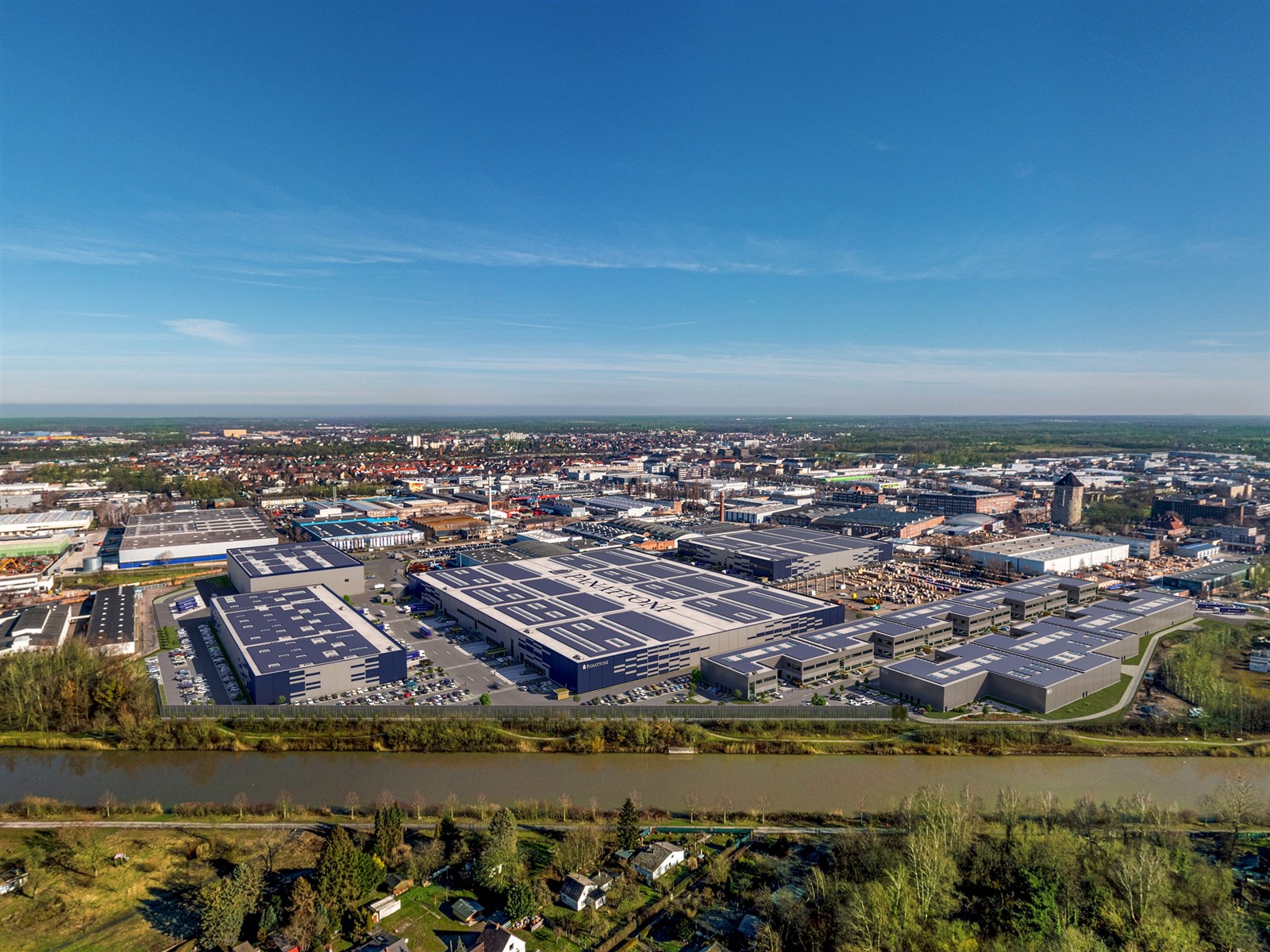 Panattoni, the leader of the industrial space market in Europe, is increasingly investing in post-industrial areas. The share of brownfields in the developer's total portfolio is systematically growing. In countries such as Germany, France or the Czech Republic, they already account for more than half of all projects being implemented. In total, these types of investments currently account for one-third of the total space delivered by Panattoni in Europe and fit perfectly into the sustainable development strategy implemented by the developer.
Growing interest in post-industrial areas
- Out of our 317 projects in Poland in the last three years, as many as 77 are brownfield investments. They are increasing because land resources for construction are shrinking, and competition for investment land is growing. At the same time, post-industrial areas are extremely attractive to investors, despite higher implementation costs. They are most often located within city limits, which translates into better communication and access to infrastructure. E-commerce and logistics companies are eager to use them as part of the so-called last mile” - explains Michał Samborski, Head of Development at Panattoni.
This summer, construction will begin on a Panattoni park in the Grand Paris Sud industrial zone. This is one of the largest industrial markets in France with limited access to new land. The park will be built on a site previously occupied by a concrete factory and a building materials warehouse. The developer has planned to transform this area into a modern logistics center, serving the dynamically developing e-commerce market in France. As part of the revitalization, new buildings will be constructed, the facades of which will be made of recycled materials, photovoltaic panels will be installed on 60% of the roofs of the industrial space, and the roofs of office buildings will be covered with vegetation.
Sustainable development through revitalization
Brownfield investments bring back to life resources and spaces that have been unused for years, and their reuse contributes to environmental protection. - Land reclamation and revitalization of areas where brownfield investments are located is one of the elements of responsible land management in European Union member states and its sustainable development policy. We are restoring the original functions to degraded areas, while at the same time carrying out a number of activities related to the protection of the environment and local ecosystems. In this way, we contribute to reducing CO2 emissions, creating jobs and improving the quality of life of local communities - says Piotr Kociołek, Environmental Director, Panattoni.
Reclamation of post-industrial areas includes, among others, removing soil contamination, soil stabilization and the introduction of new plant species. Thanks to this, they become safe for people and environmentally friendly again, and their aesthetic and utility value increases. In 2020, the soil remediation process began at Panattoni Park Slough in the UK. The company ICI Paints, which previously used this area, left behind land heavily contaminated with solvents, hydrocarbons and paint waste. Another example is the German Panattoni Campus Hanover City Centre, which is being built on a 130-year-old industrial site contaminated with artifacts from World War II. Revitalization works have been ongoing for a year, and most of the demolition material will be used for the hall's foundation. The area where Citi Logistics Katowice (Poland) was built was also reclaimed. Located on Miedziana Street, the plot is in a historical mining and metallurgical area, and the soil here was partially contaminated with petroleum substances and heavy metals. Through remediation, the developer reclaimed approx. 2000 cubic meters of soil at a cost of 330,000 EUR.
The implementation of such investments also contributes to reducing the consumption of energy, water and other resources. New facilities built on post-industrial areas fit into the principles of a circular economy and are more energy-efficient, which translates into limiting their negative impact on the environment. Like all other facilities, they undergo environmental certification, currently at the BREEAM Excellent level. The first one to receive such a high rating was a brownfield investment - Panattoni Park Sosnowiec (Poland) located on the site of a former glassworks.
In Mannheim Ost, Ladenburg (Germany), Panattoni built a facility for a logistics operator - neska - which received a gold-level certificate from the German Sustainable Building Council (DGNB Gold). A new habitat for a local species of lizard was created on the investment site, showing a harmonious balance between development and ecological protection.
Towards a circular economy. When transforming post-industrial areas, many building materials are recycled or reused. Thanks to this, the need to obtain new raw materials is reduced and the amount of waste is decreased. During the construction of City Logistics Kraków in Poland at a former concrete factory in Nowa Huta, 90 percent of waste was recycled. In the case of Panattoni Park Ostrov North in the Czech Republic, which was built on the site of the closed Škoda Ostrov trolleybus factory, as much as 98.7% of demolition materials were processed into secondary raw materials, and 96.7% of them were reused on the investment site. Thus, transport of construction materials was reduced by about 10,300 trucks.
As Emilia Dębowska, Sustainability Director, Panattoni, notes: „Bringing post-industrial areas back to life is an important step towards a green future. Brownfield investments reduce resource consumption and CO2 emissions, improve the quality of life of local communities, and protect the natural environment. By implementing this type of investment throughout Europe, Panattoni shows its determination to achieve sustainable goals, both at the local and global level. It can be expected that the share of brownfields in the total number of development projects will only continue to grow”