Elevated GLP standard
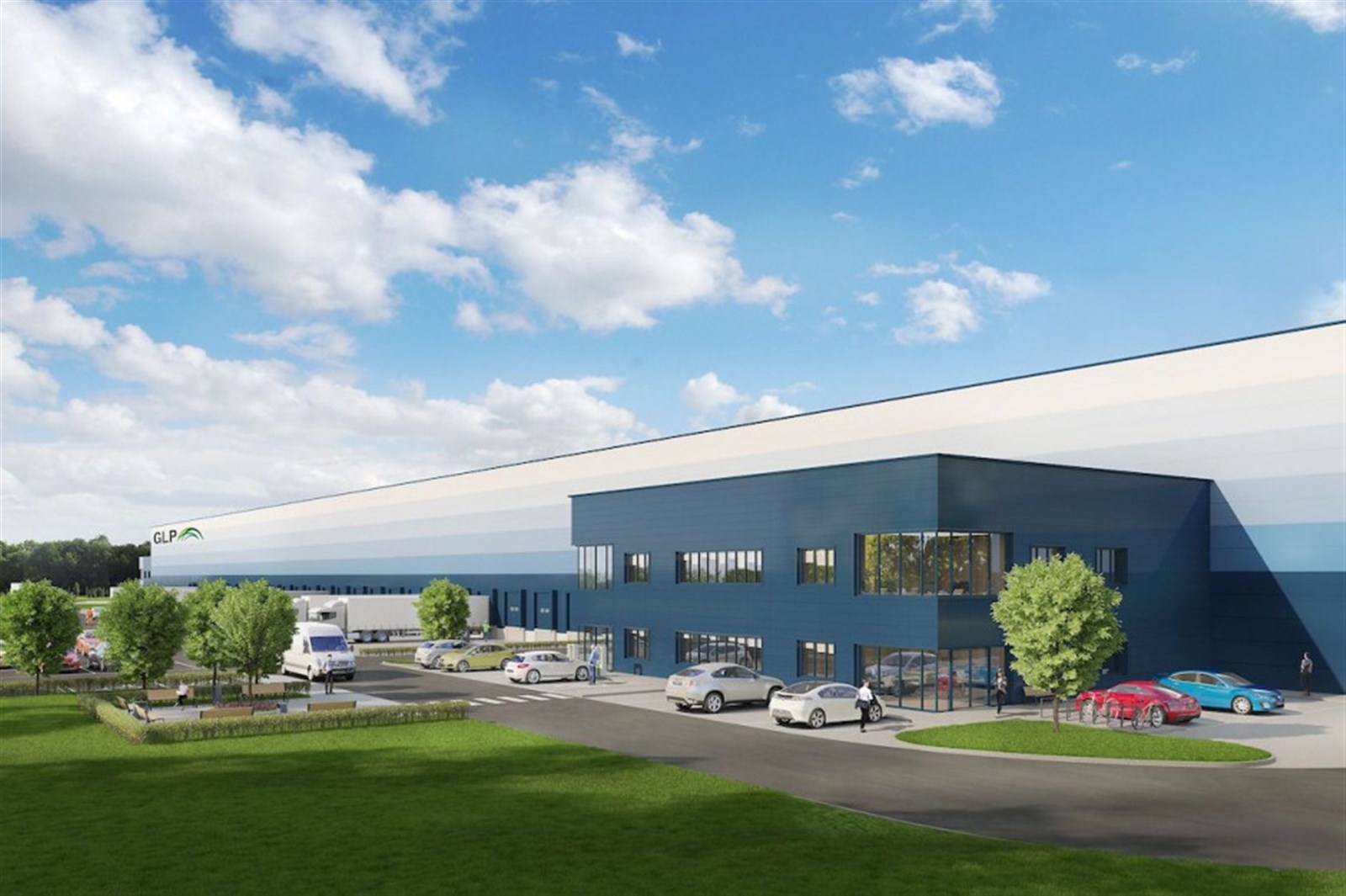
The GLP Design Standard has been implemented since 2020 in all countries in Europe where the company operates. It primarily consists of solutions that ensure more efficient use of space for daily logistics operations and promote lower utility consumption, a reduced carbon footprint, greater biodiversity, and better employee health.
GLP's plans for the coming year include the expansion of the Pomeranian Logistics Centre, located next to the Deepwater Container Terminal DCT in Gdańsk, with a fifth warehouse (39,000 sqm of leasable area), as well as the start of new investments in Lędziny near Tychy (ultimately 110,000 sqm) and Magnice near Wrocław (230,000 sqm). The company has a land bank in Poland that allows it to double its portfolio of completed properties through the construction of buildings with a total area of approximately one million square meters.
„Our experience in working with clients shows that more and more of them expect solutions previously available mainly in build-to-suit facilities. Taking into account market dynamics and increased demand for warehouse space due to the pandemic, we believe this is a good time to set a new standard for speculative buildings in Poland, based on GLP's European experience” – says Jarosław Czechowicz, Country Manager GLP Poland.
GLP has already completed a pilot project in the new standard – the Warsaw II Logistics Centre with an area of 32,000 sqm in Wypędy near Warsaw. What will tenants find there? In short: more storage space on the same footprint they would have to rent in a typical warehouse, a spatial layout that facilitates logistics operations, and significant savings due to lower utility consumption.
The primary advantage of GLP buildings constructed to the new standard is their height – two meters higher than in typical speculative logistics facilities. Twelve meters of clear height inside the warehouse means that users gain an additional storage level on the same warehouse footprint, which can generate up to 20% savings on rent.
In GLP buildings, thanks to their reinforced structure and the relocation of the first row of columns, the loading zone is 24 meters wide. This facilitates forklift maneuvering and the entire transshipment process. Healthier working conditions are provided by twice the usual number of roof skylights – for every 100 sqm of roof, there are 4 sqm of skylights, guaranteeing access to natural, eye-friendly light inside.
In GLP buildings around the world, more than 1.5 million sqm of solar panels have been installed to date, which together produce about 86 megawatts of energy. Thanks to the reinforced roof structure, facilities built in Poland fit into this trend, enabling clients to install solar panels and thus power building operations with green energy from renewable sources.
In new GLP buildings, smart metering will be standard. A system monitoring electricity, water, and gas consumption sends data from meters to an application. Tenants and center managers can therefore track utility consumption trends in real-time: whether heating control is working correctly, whether power consumption by devices is appropriate, whether there is a water leak, etc. The system records energy waste, for example, when a warehouse is being intensively heated while docks are open. Lower energy consumption, and thus additional savings, is also ensured by the use of LED lighting controlled by an intelligent DALI system. GLP buildings are inspected with a thermal imaging camera before being put into use to check the tightness of insulation and eliminate thermal bridges. All new GLP buildings in Poland will have a BREEAM certificate at the „Very Good” or „Excellent” level.
„The energy efficiency of our properties is one of the most important goals that GLP sets for itself worldwide. Operating in a building that meets the highest standards in this regard is an opportunity for our clients to achieve long-term savings and meet their own goals in terms of sustainable development and eco-friendly activities” – says Christophe Brzezinski, Head of Technical Development at the Polish branch of GLP.
Despite their speculative nature, the planned GLP buildings will be able to be used by the most demanding industries. For example, for companies storing flammable, high-risk goods, the standard includes the highest class of fire resistance for buildings (MJ >4000). Furthermore, due to the requirements of manufacturing companies, the floor load capacity has been increased to 7 tons per square meter to withstand the pressure of heavy machinery. The thickened floor also allows for the use of system trucks guided by an induction loop.
Complementing the offer of new GLP buildings is increased attention to their green surroundings, the introduction of infrastructure encouraging employees to use bicycles (covered racks), and the possibility of creating representative office spaces. In the latter, emphasis is also placed on improving acoustic insulation (beyond Polish standards), especially in manufacturing buildings where loud machines operate, as well as more efficient ventilation, e.g., in conference rooms, which increases daily user comfort and their safety in times of intense virus transmission.
„The new standard means changes at the design, construction, and facility management stages that will have a positive impact on our clients' operations – efficiency, smooth supply chain functioning, employee satisfaction, and compliance with declared environmental goals. This is an important step in the development of the Polish logistics real estate market” – summarizes Jarosław Czechowicz, Country Manager GLP Poland.
Construction of the next logistics park in accordance with the GLP Design Standard is planned for January. This will be the GLP Lędziny Logistics Centre in Upper Silesia.