Panattoni gives a second life to wind turbines
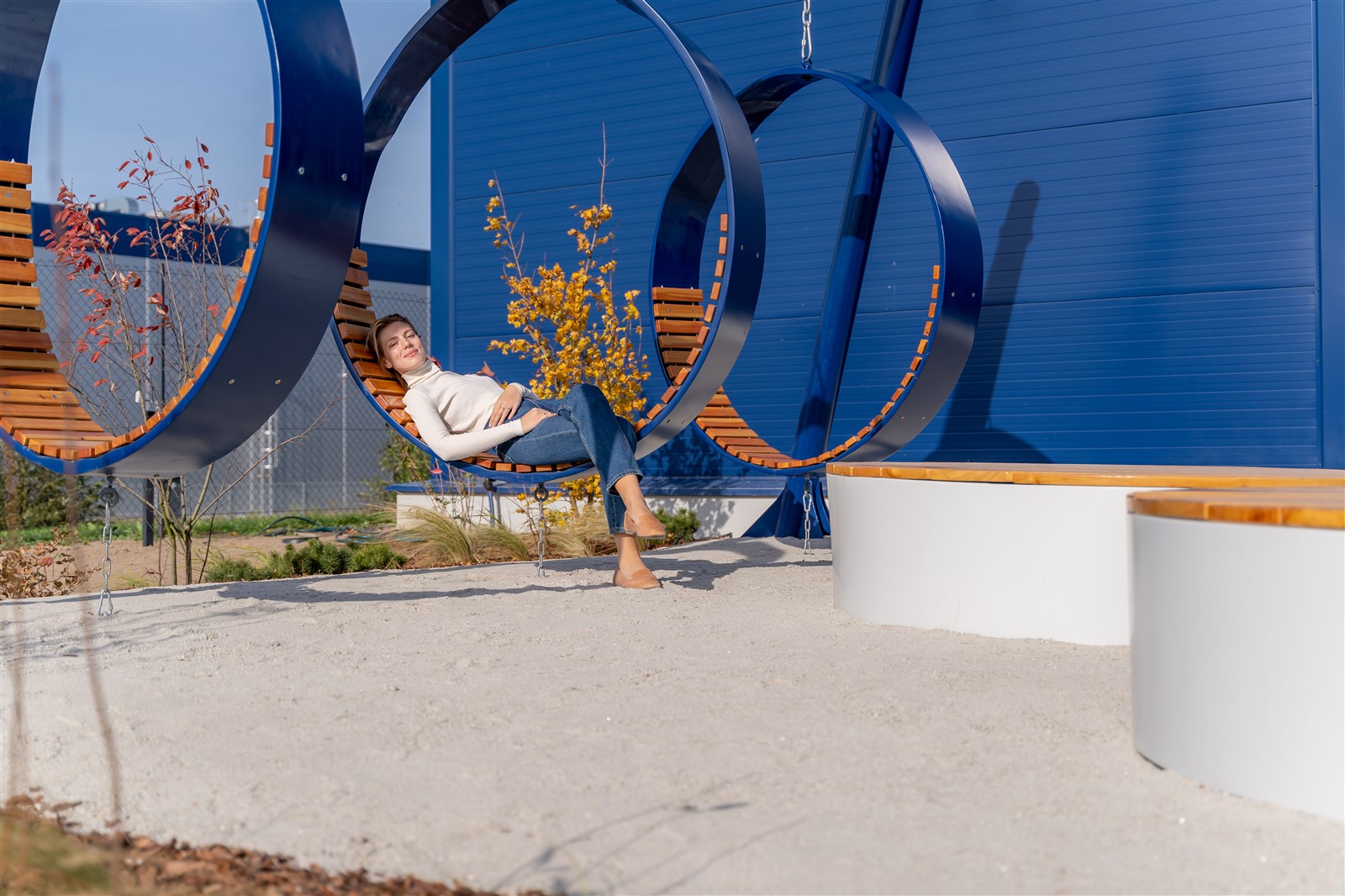
Panattoni supports the upcycling of green energy infrastructure. The developer already has eco-friendly urban furniture made from used wind turbines at fifteen locations. In 2023, such furniture will appear in another hundred places.
Life after wind. Dozens of deckchairs, benches and swings - made from wind turbine blades - have been placed in green and recreational areas around Panattoni facilities, including in Kraków, Kalisz, Wrocław, Wałbrzych, Małe Żerniki, Pruszków or Nadarzyn. This is the result of cooperation with the company Anmet, which has been specializing in waste recycling for over 20 years, and has been offering wind turbine blade recycling since 2015.
"Repurposing wind turbines is becoming crucial in this situation for the further development of wind energy and RES in general, and without energy from renewable sources, we will not achieve the goals of the EU taxonomy. By implementing our "Go Earthwise with Panattoni" concept, we act holistically – focusing on energy from renewable sources, but also implementing the ideas of a circular economy. We are happy that by introducing furniture made from recycled turbines, we can contribute not only by implementing green energy in our facilities, but also by making its production greener" - says Emilia Dębowska, Sustainability Director at Panattoni.
The wind turbine blades from which Anmet makes urban furniture served for 25 years. One wind turbine saved 36,500 tons of CO2 emissions over its lifetime, which would have been associated with energy production in thermal power plants powered by fossil fuels.
Support for RES. In 2022, Panattoni delivered approx. 315,000 MWh of certified energy from renewable sources, which allowed for a reduction of CO2 emissions by 160,000 tons. A year earlier, it was 250,000 MWh, and the savings were over 125,000 tons of CO2. The developer is also increasingly focusing on heat pumps – including at the Danfoss Poland factory in Grodzisk Mazowiecki - and photovoltaic installations. The company provided structures with a reinforced roof for photovoltaics, among others in Świebodzin, where a facility with an area of 200,000 sq m was equipped with nearly 4,000 panels. In Żerniki and Pietrzykowice, the developer implemented ground-mounted installations. Panattoni also consistently supports the circular economy, in which the reuse of raw materials is key - recycling at the developer's construction sites exceeds 90 percent.
Winds of change. Wind energy is one of the foundations of Europe's and the world's transition to zero-emissions. In Poland, the installed capacity of wind farms at the beginning of 2022 was only 7.2 GW, and further investments, including farms in the Baltic Sea, are to drive the development of this source. Similarly in the European Union, where an average of 18 GW of wind capacity is to be installed each year until 2026. In 2021, Europe installed 17 GW of new wind energy capacity. Still not enough to be on track to meet the EU's 2030 climate and energy targets[1]. Therefore, further growth and more turbines can be expected.
According to a publication by the University of Cambridge - "Wind turbine blade waste in 2050" - wind power plants could produce as much as 43 million tons of waste worldwide by the middle of the century, a quarter of which in Europe. In the next five years alone, nearly 15,000 wind turbine blades could be decommissioned in Europe.
"Proper management after the service life will be one of the most important challenges of the coming decades. Panattoni shows that the industrial real estate sector can also play its part in this positive trend" - adds Emilia Dębowska.
[1] https://windeurope.org/intelligence-platform/product/wind-energy-in-europe-2021-statistics-and-the-outlook-for-2022-2026/