Panattoni with another completed and fully leased park in Lesser Poland
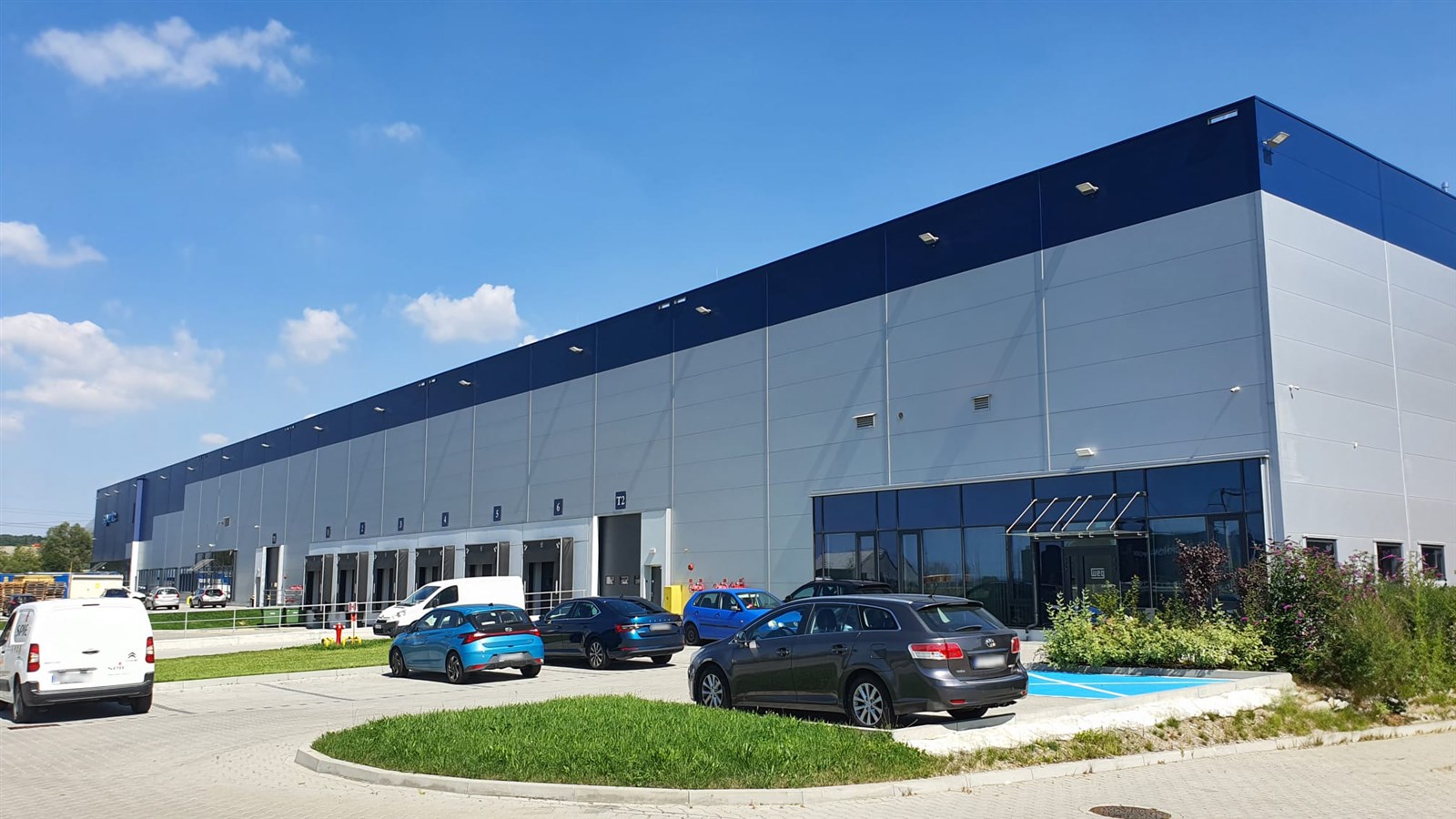 Panattoni with another project for a demanding industry. The developer has completed space within Panattoni Park Kraków West I tailored to the biotechnological company SyVento BioTech, which will conduct advanced development work and biotechnological production to cGMP standards. The park in Skawina has been fully leased, and the space is also used by representatives of the retail, electronics, and logistics industries.
By completing another park in the Kraków region and fully commercializing it, Panattoni confirms the unflagging demand for space in Lesser Poland. In July this year, the developer exceeded a quarter of a million sq m delivered in the region. The Panattoni Park Kraków West I project in Skawina za Górą shows the region's potential for many industries. The facility's space is used by representatives of the retail, logistics, and electronics industries, as well as one of the largest suppliers of industrial electric motors for manufacturers of pumps, compressors, and fans.
More than 4,300 sq m was taken by the biotechnological company SyVento BioTech, which offers technologically advanced, innovative liposomal nanocarriers, with a particular focus on LNP formulations for the development and manufacturing of pharmaceuticals, including drugs based on nucleic acids, e.g., RNA. The comprehensive offer of SyVento BioTech provides the opportunity to carry out projects related to both the development of liposomal formulations for many pharmaceutical substances, including RNA synthesis, and the final production of ready-made therapeutics for human administration, along with service support at all stages of product development to cGMP standards. Within the Panattoni park, SyVento BioTech will conduct biotechnological development and production, providing its services on a global scale. In addition, the developer provided approx. 500 sq m of office space of a very high standard, which perfectly serves the representative function of SyVento BioTech.
- "The Kraków region, centered around the second-largest city in the country, attracts technologically advanced companies that gain access to qualified employees, graduates of the best technical universities in the country" - says Marek Dobrzycki, Managing Director at Panattoni, and adds: - "Modern industrial properties are finding increasingly wider applications - they are becoming not only storage or logistics facilities, but also technological ones. Laboratories and R&D departments are being created on the premises of our facilities, and all this harmoniously combines with production space and modern offices, creating a well-functioning organism"
The convenient location, which testifies to its international potential, also helped in the commercialization of Panattoni Park Kraków West I. The facility allows reaching the Polish-Slovak border in about 80 minutes and the Polish-Czech border in less than 2 hours. Furthermore, the proximity of the A4 motorway junction - which runs less than 10 minutes from the investment - ensures good connections to the south-western border with Germany (e.g., via Katowice, Opole, and Wrocław) and the south-eastern border with Ukraine (e.g., via Rzeszów). The investment has also been equipped with a number of sustainable solutions and will undergo BREEAM certification.
Production focuses on Lesser Poland. The space handed over to SyVento BioTech is another area in the Kraków region intended for production processes. This year alone, Panattoni has delivered in the region, among others, over 20,000 sq m for Trivium Packaging - a global manufacturer of metal packaging, and in recent weeks it completed a BTS facility in Skawina - 9,400 sq m was taken by a leading manufacturer of components for insulating glass units. - "Although the main client groups in the region are still e-commerce and logistics companies, the share of manufacturing enterprises is growing, which is a natural result of the reindustrialization of Europe, and Poland plays a special role here. Demand in the Lesser Poland region is still very high, which translates into a vacancy rate of only about 1 percent" - concludes Marek Dobrzycki.