Panattoni with its third BREEAM Outstanding certificate in Poland, eighth in Europe
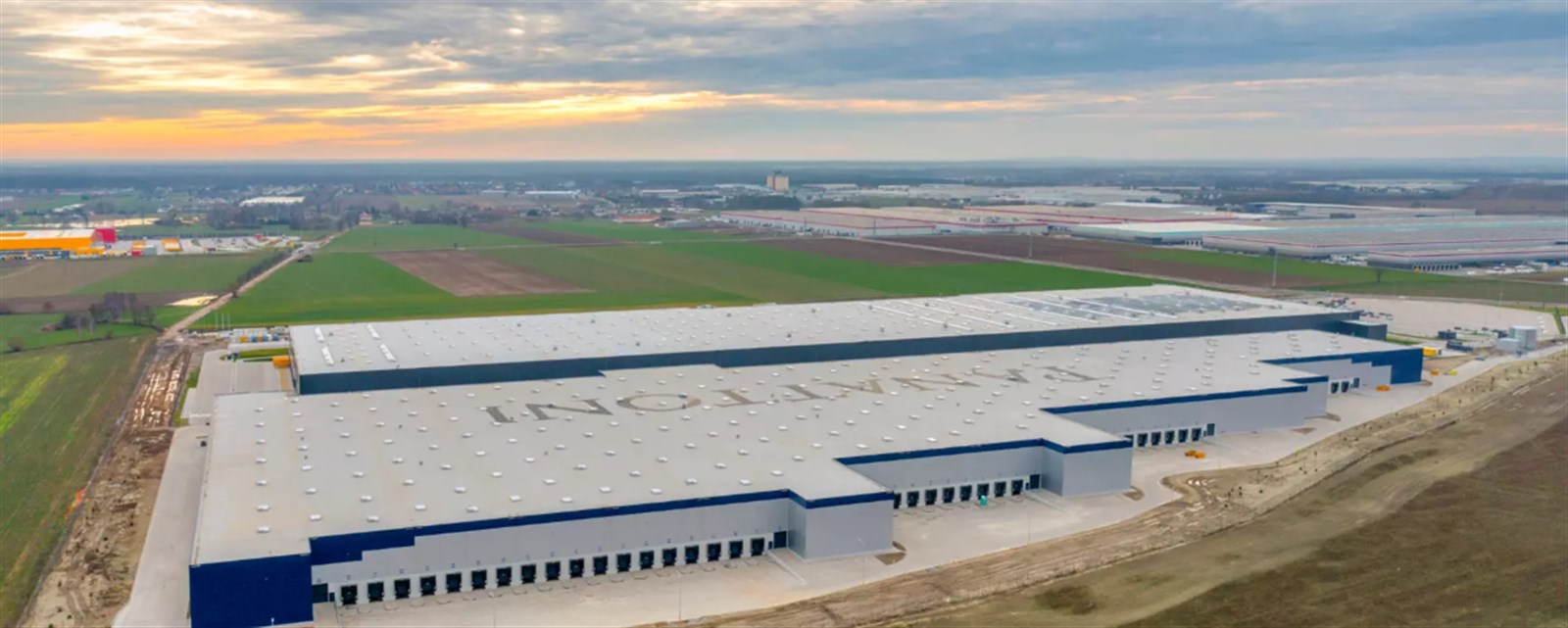 Panattoni has obtained another BREEAM Outstanding level certificate – for Panattoni Park Poznań A2 (hall B). The building, developed for H&M, was constructed without the use of PVC. This is the developer's third investment in Poland and eighth in Europe to achieve the highest level of BREEAM certification, joining an elite group of facilities with such a high rating. Additional Panattoni facilities with a total area of 460,000 sqm are currently in the certification process at this level.
The latest BREEAM Outstanding certificate was awarded to hall B – built as part of Panattoni Park Poznań A2 in Robakowo near Poznań – for H&M, one of the giants of the clothing industry. The facility, with an area of nearly 82,000 sqm, was built without the use of PVC. Primary energy consumption in the building has been reduced by over 27% compared to national requirements, and water consumption has been limited by 70% compared to the baseline model. Over 95% of construction waste was recycled or recovered. This allowed for a significant reduction in pollution generated by the building throughout its life cycle.
- „We are proud that Panattoni Park Poznań A2 is joining the ranks of our investments with the highest BREEAM Outstanding certificate. This is a confirmation of our commitment to building a future where sustainable construction and ecological innovations become the norm, for the benefit of clients, investors, and society” - says Marek Dobrzycki, Managing Director at Panattoni.
Energy efficiency is key. Hall B at Panattoni Park Poznań A2 received the maximum number of points in the energy performance area. It is equipped with a 700 kWp photovoltaic installation, which significantly reduces the facility's dependence on conventional energy sources, reducing CO2 emissions and lowering operating costs. The building's energy efficiency is enhanced by integrated high-performance HVAC systems, energy-saving LED lighting with a DALI control system, heat recovery, and an intelligent Building Management System (BMS). As a result, primary energy consumption has been reduced by over 27% compared to national requirements.
The facility is not only energy-efficient but also prepared for future climate changes and adaptations to functional changes in the future. LCA (Life Cycle Assessment) and LCC (Life Cycle Cost) analyses were conducted, which allowed for the reduction of the embodied carbon footprint, among other things, through the conscious selection of building materials with low emission levels and EPD environmental declarations. Over 95% of construction waste was recycled or recovered.
Water consumption has been significantly optimized. A rainwater recovery system has been introduced, which is used for irrigation of greenery and flushing toilets. A system preventing uncontrolled water leakage was applied, and in the bathrooms, water solenoid valves with motion sensors were installed. Combined with the installation of water meters and water-saving sanitary equipment, this enabled a 70% reduction in water consumption compared to the baseline model. The investment's impact on local water resources is further minimized by a drinking water treatment plant and a biological sewage treatment plant on the investment site.
Wellbeing and biodiversity. The investment stands out not only for its advanced technologies reducing energy and water consumption but also for its care for user well-being. The facility provides excellent working conditions thanks to high indoor air quality, large glazing in the office section, and maximum use of natural lighting, and above all, many spaces for recreation and relaxation. Among them are, among others, a gym, an outdoor terrace, a volleyball court, a boules court, and a canteen. Infrastructure for cyclists has been prepared – bicycle shelters, changing rooms, and showers. As many as 22 parking spaces are equipped with electric car chargers. Employees can also use a special bus.
The natural environment has been taken care of. In cooperation with a qualified ecologist, over 500 trees and 1000 shrubs, resistant to weather conditions and easy to maintain, were planted. In this way, the local ecosystem was enriched and valuable habitats for local fauna and flora were created.
- „Through investments such as Panattoni Park Poznań A2, we are setting new standards in the industrial real estate industry and taking another significant step on Europe's path to climate neutrality by 2050. Especially since, according to the latest intentions of the European Commission, by 2040, the reduction of harmful emissions is to be limited by 90 percent compared to 1990. I thank the assessors from the company PM Services for supporting us in this” – says Emilia Dębowska, Head of Sustainability Europe, Panattoni.
Before Panattoni Park Poznań A2, two other Polish investments by the developer received the BREEAM Outstanding certificate. First, Panattoni Park Szczecin III (halls A and B), which was the first project on the Polish industrial real estate market with such a high level of certification. The second – Panattoni Park Konin – which, with a rating of 90 percent, remains the highest-rated industrial building in Poland.
Panattoni was also the first developer to include the environmental assessment of facilities in the standard of its projects – currently at the high BREEAM Excellent level. In Poland, it has already certified over 9.5 million sqm of built area – this is almost one-third of the national resources – and 14 million sqm in Europe. Another 6 million sqm are in the process of obtaining the certificate.