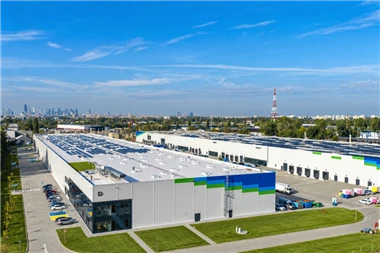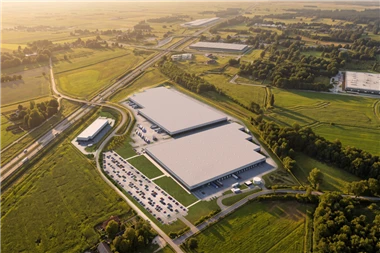
Panattoni has completed an ambitious project for Reynaers Aluminium, one of the leading manufacturers of aluminium systems in Europe. The investment, located in Żabia Wola, includes a modern factory facility with an area of 31,000 sqm and an office building that creates a friendly, functional space enclosed in a unique and aesthetic architectural form.
Building architecture
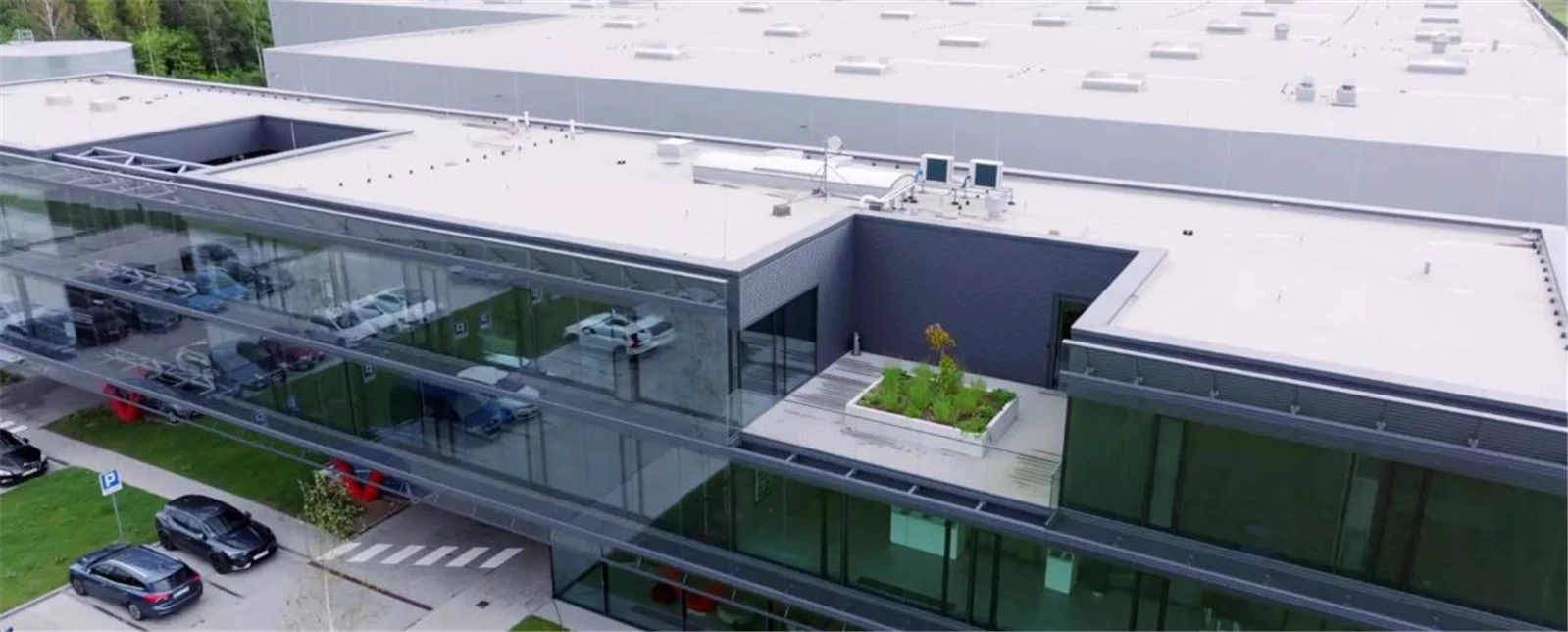
The front of the entire Reynaers campus near Warsaw is an office building with an area of 1,200 sqm. It is a levitating, glazed structure supported by red, V-shaped columns (illuminated in the evening). Its expressive and modernist form refers to the company's innovative technological solutions. Two cutouts in the western facade create a patio with a picturesque birch tree and a terrace with plantings on the top floor, which introduces elements of nature into the building's interior.
Glazed facades on three sides provide excellent natural lighting, improving employee well-being, reducing eye strain, and increasing productivity. The use of a double-skin facade – a buffer construction consisting of two layers of external walls with an air space between them - improves the thermal and acoustic insulation of the office building, protecting against overheating and eliminating noise from the nearby expressway. External blinds are used in the space between the glazing, which additionally protect against excessive sunlight. The double facade allows for a 30% reduction in heat loss, and openable windows enable natural ventilation and improve indoor air quality.
Ergonomics of space and employee comfort
On the three above-ground floors of the office building and one underground floor, there are offices, a showroom, conference rooms, a dining room with large glazing and a terrace, and changing rooms. All levels are connected by a panoramic elevator and an open staircase. The ground floor is divided into a public area and an office area. The reception hall leads directly to an open, two-story showroom space where large-scale Reynaers Aluminium system solutions are displayed - including window profiles and curtain walls of buildings - visible from both the ground floor and the mezzanine on the first floor.
The entire building design has been carefully thought out to ensure maximum comfort for employees and to create a friendly workspace:
· Glazed facades provide abundant natural light, improving employee well-being, reducing eye strain, and increasing productivity. 95% of the floor area in the office zone is within 7 meters of a window, which provides an adequate view of the outside.
· Wooden acoustic ceilings in the main communication routes and office rooms reduce noise, which contributes to creating a quiet, comfortable work environment. In training rooms, the dining room, and other communication routes, modular solid ceilings with high sound absorption were used.
· Natural materials - the building's interiors are finished with natural materials, such as wood, which creates a warm and friendly atmosphere, reminiscent of a home space.
Employees can use facilities for cyclists, a specially designed room for parents with children, a dining room with glazing and access to a terrace, as well as spacious training rooms and glass meeting rooms, which promotes relaxation, team integration, and effective communication and cooperation.
Sustainable solutions
The entire complex was designed with sustainable development, energy efficiency, responsible resource management, and minimizing negative environmental impact in mind. The production hall is equipped with 3 technological lines for profile painting. These processes take place in chromium-free, environmentally friendly technology. The company has installed a demineralized water production station (Demi Station) and a WWT wastewater treatment plant.
Solutions used in the office building include, among others:
· Natural lighting - glazed facades and roof skylights provide access to natural light, which reduces the need for artificial lighting and energy consumption.
· Heating and cooling systems – The office building uses a ground-source vertical heat exchanger and heat pumps from ground and air sources, which effectively use geothermal energy and provide passive cooling and heat recovery from the office building's cooling process. Additionally, the quality of external partitions and the airtightness of the entire facility allowed for a 39% reduction in primary energy consumption compared to a reference building.
· Energy-saving technologies: An intelligent automation system controls the selection of the current heat source, ensuring efficient heating and cooling of rooms and optimal conditions for each of them.
· Natural Materials - all wood and wood-based products used come from legal logging and timber trade, supporting the circular economy.
The result of the applied solutions is a reduction in the embodied carbon footprint of the entire investment (hall and office) by nearly half - the Embodied Carbon Benchmark coefficient was 208 kg CO2e/m², which is about 3.46 kg CO2e/m²/year. The complex received an A rating on the reference scale for halls and industrial buildings in Poland. The total carbon footprint of the complex is 35.8 kg CO2e/m²/year.
Importantly, the office annex includes an underground part with a higher embodied carbon footprint. Raising the office space above the parking lot and supporting it with columns allowed for significant optimization of the carbon footprint of the entire investment.
Integrated Greenery and Biodiversity
The architectural complement to the office building and the entire campus is greenery.
· Tree and vegetation plantings - three rows of trees were planted, which create a green compositional axis for the office building, improve the aesthetics of the surroundings, and create a natural sound and thermal barrier. There are over 37,200 sqm of green areas on the Reynaers campus, which supports local fauna and flora.
· Landscape management plan - an ecological audit was conducted and a 5-year landscape and habitat management plan was developed, which is intended to ensure the protection and development of local ecosystems.